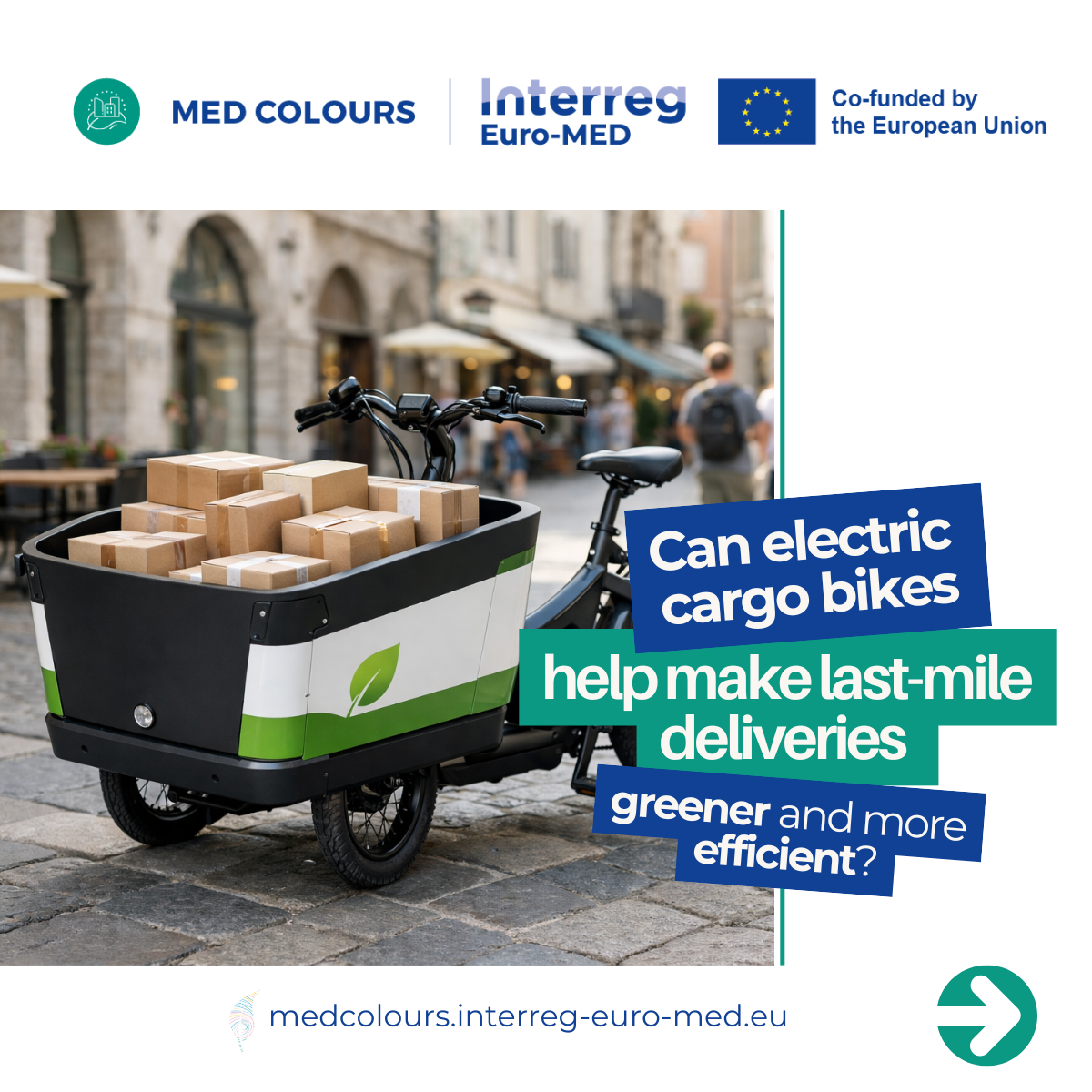

New episode of the MED COLOURS column dedicated to the topic of resilient and sustainable urban logistics. Once a month, we suggest articles, insights and studies of particular interest to the topics related to the project, with the aim of increasing knowledge related to the topics, and stimulating debate and knowledge exchange, which are essential ingredients for the achievement of our project goals.
This month’s focuse is: can electric cargo bikes help make last-mile deliveries greener and more efficient?
A practical example from across the ocean: the city of Seattle is exploring the use of electric cargo bikes for freight deliveries to reduce emissions, cut traffic congestion and improve urban wellbeing. According to an article from The Seattle Times, local policymakers and logistics actors are piloting e-Cargo bikes as a cleaner alternative to traditional delivery vans, especially in dense urban areas where tight streets and heavy traffic make last-mile deliveries challenging.
These e-cargo solutions not only lower greenhouse gas emissions, but also reduce noise and improve safety for cyclists and pedestrians. A vision that resonates strongly with sustainable urban logistics goals across Europe.
Although Seattle is not in Europe, its experiment provides valuable insights for European cities engaged in the transition towards low-carbon urban freight: integrating e-cargo bikes alongside local policies, incentives and infrastructure can unlock more efficient and community-friendly delivery systems.
🔗 Read the full article here: https://www.seattletimes.com/seattle-news/transportation/seattle-eyes-electric-cargo-bikes-for-greener-deliveries/
The MED COLOURS project embraces this vision, promoting sustainable and inclusive urban logistics in six cities across Europe – Livorno, Cesena, Thessaloniki, Koper, Lisbon, and Lyon – through innovative pilot actions and the development of Sustainable Urban Logistics Plans (SULPs). Our goal? A new generation of logistics and urban planning that supports fair, accessible, and low-carbon cities for all.