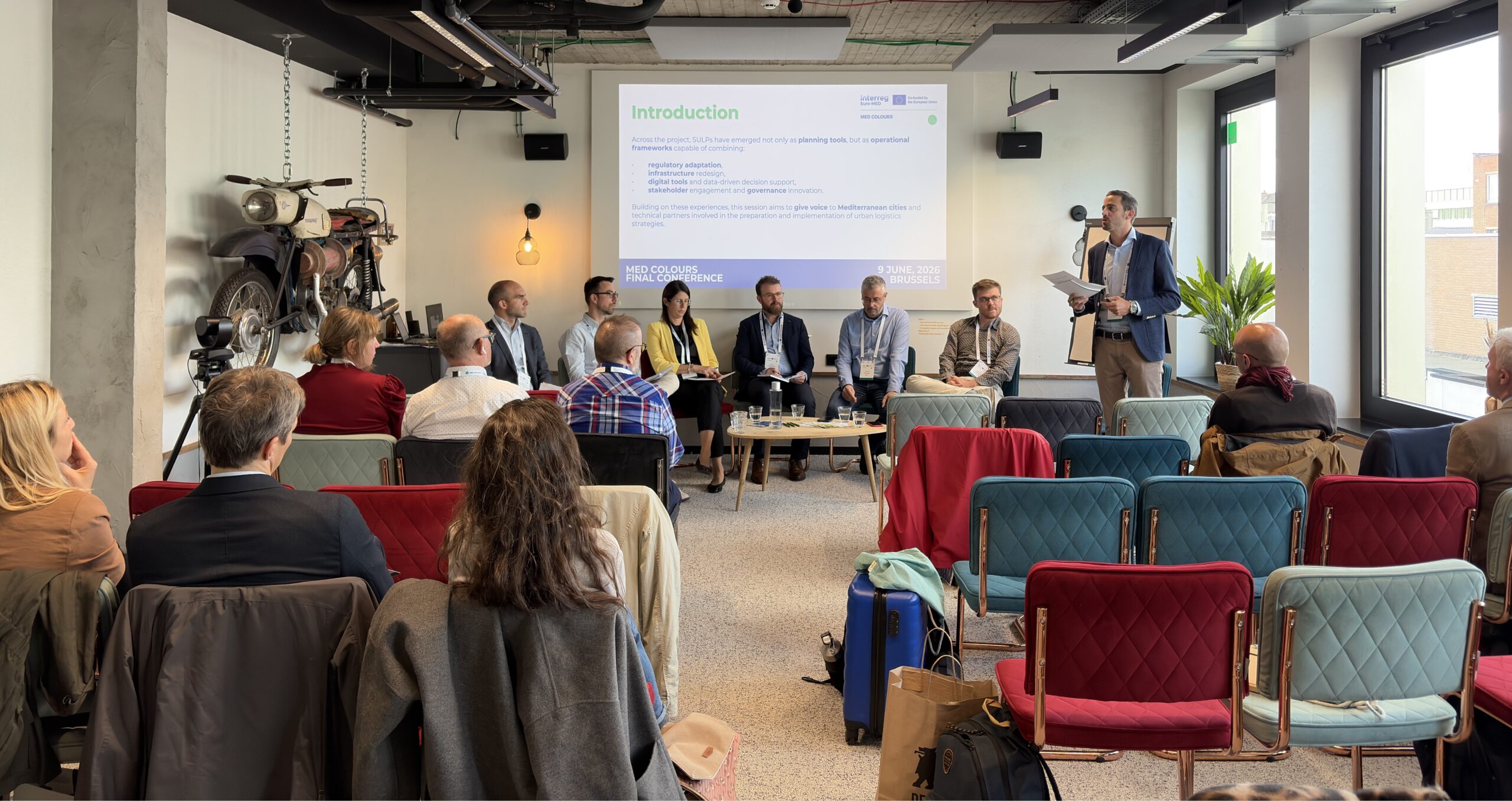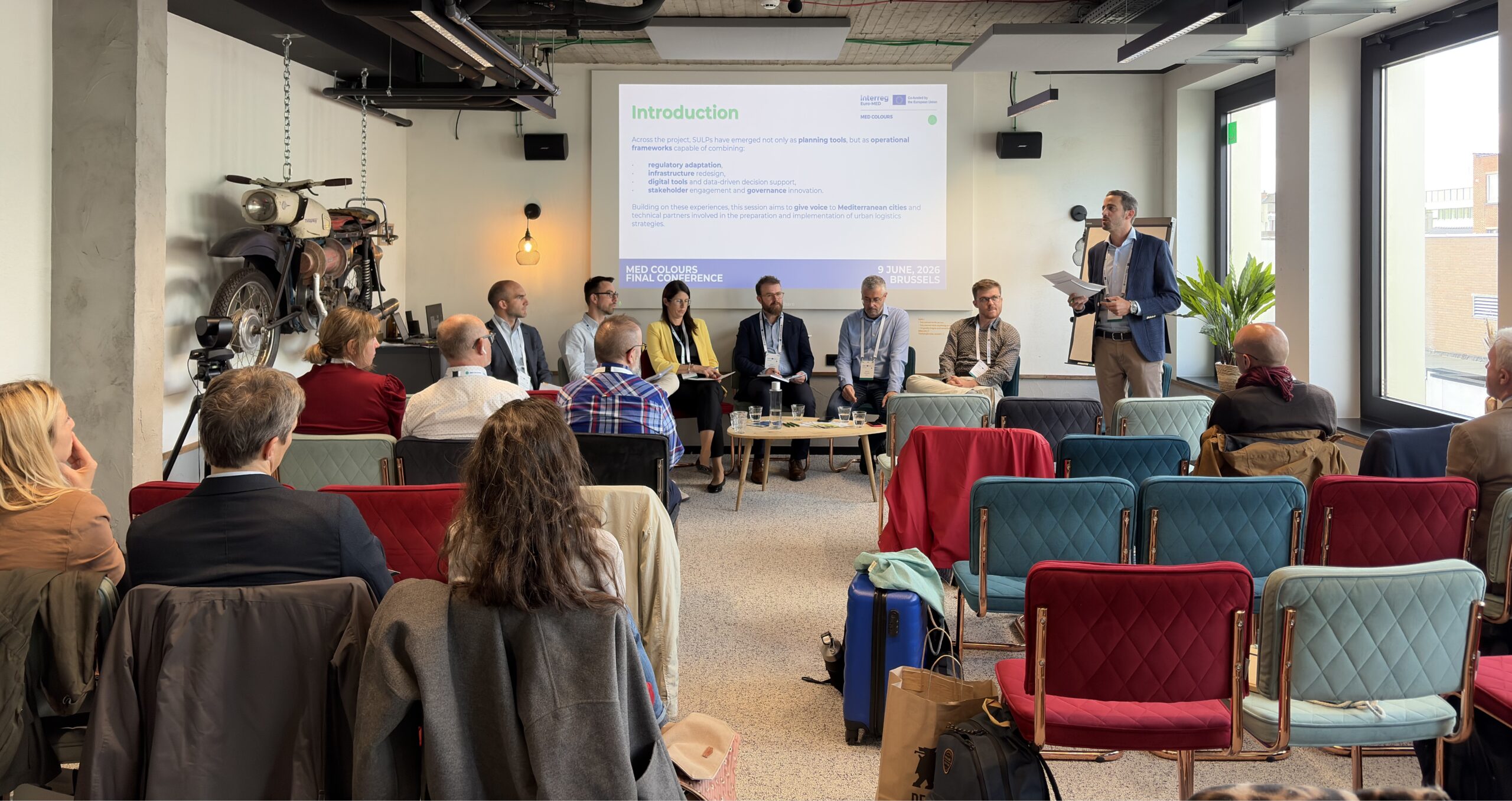

Brussels, 9 June 2026 – Policymakers, researchers, urban planners and logistics experts from across the Mediterranean gathered in Brussels and online for the MED COLOURS Final Conference, the closing event of the Interreg Euro-MED project dedicated to promoting more sustainable, resilient and zero-emission urban logistics systems.
Hosted at Comet Louise, the conference marked the culmination of years of transnational cooperation among Mediterranean cities and stakeholders working to address the growing environmental and social challenges linked to urban freight transport. Through presentations, roundtables and panel discussions, the event provided a platform to share project results, exchange experiences and explore future pathways for sustainable urban logistics planning.
Opening the conference, Lorenzo Cello (ITL Foundation, project coordinator) presented the MED COLOURS project’s main achievements, including pilot actions and the development of Sustainable Urban Logistics Plans (SULPs) to support decarbonised urban freight systems in Mediterranean cities. Danilo Čeh (ZRS Bistra) focused on the broader governance dimension of the transition, underlining the importance of policy transfer, territorial cooperation and the ETU model promoted within the Interreg Euro-MED Mission Green Living Areas.
A central moment of the morning session was the presentation of the “MED COLOURS Guidelines for Resilient Urban Logistics Planning” by Orestis Tsolakis (CERTH). The guidelines represent one of the project’s key outcomes and aim to support cities in designing Sustainable Urban Logistics Plans (SULPs) capable of balancing environmental sustainability, economic efficiency and social inclusion.
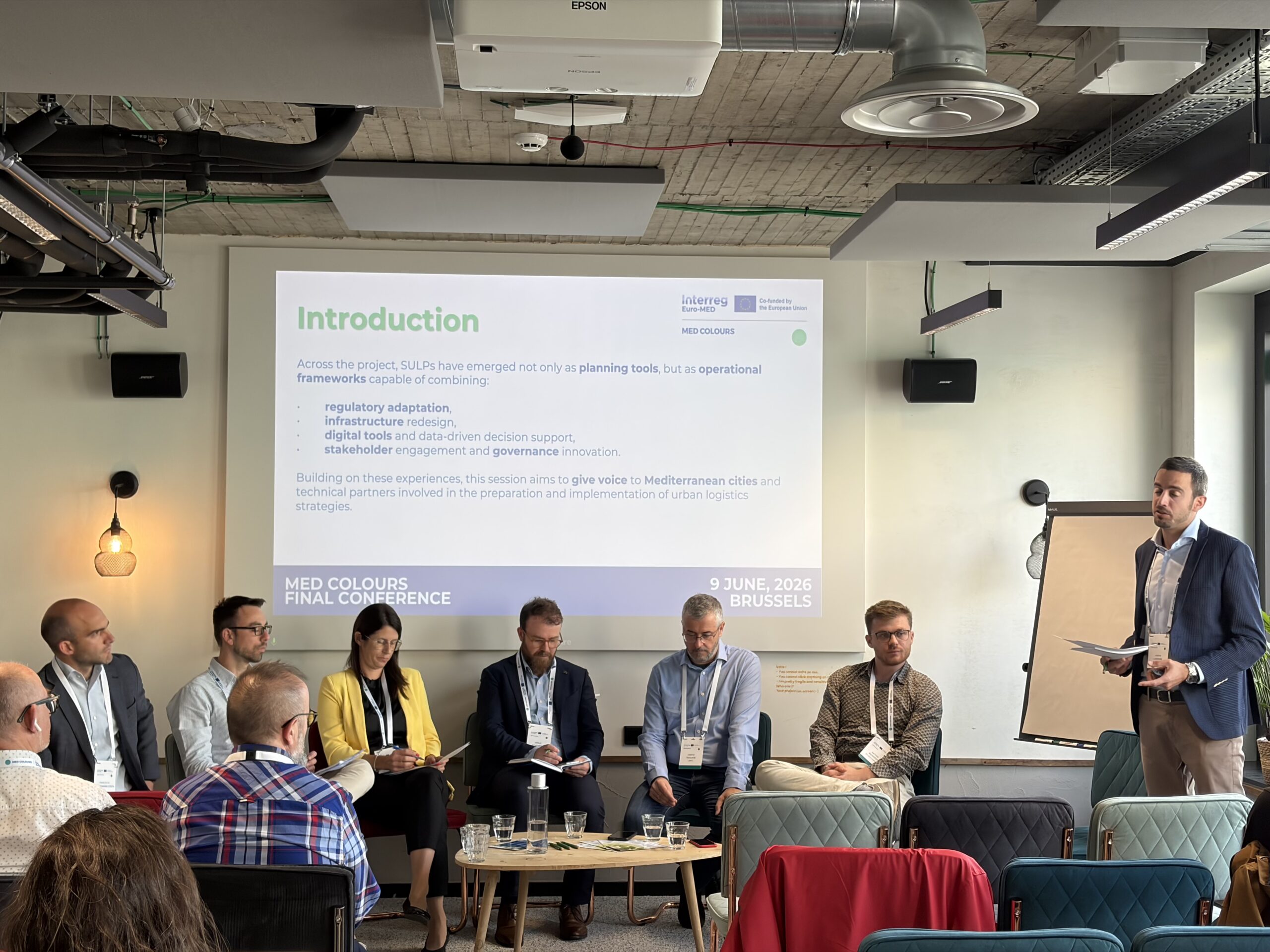
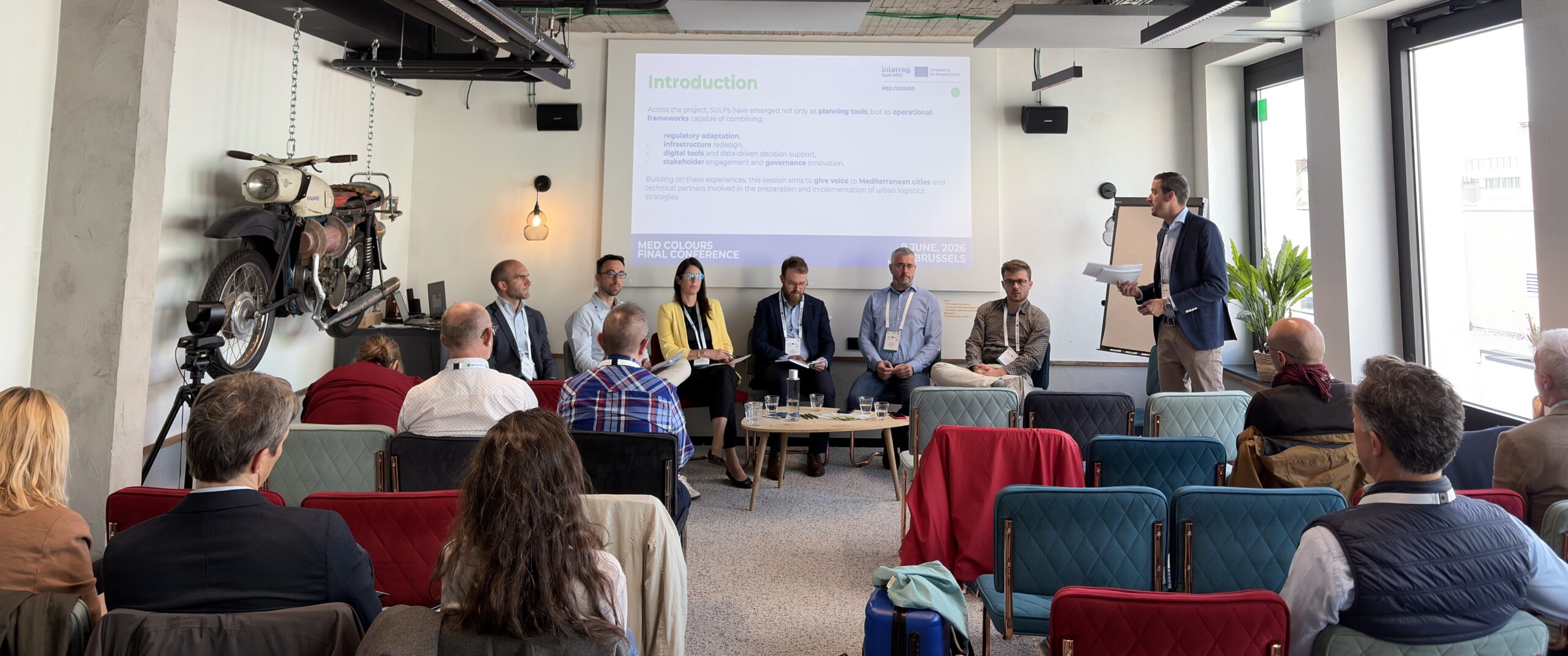
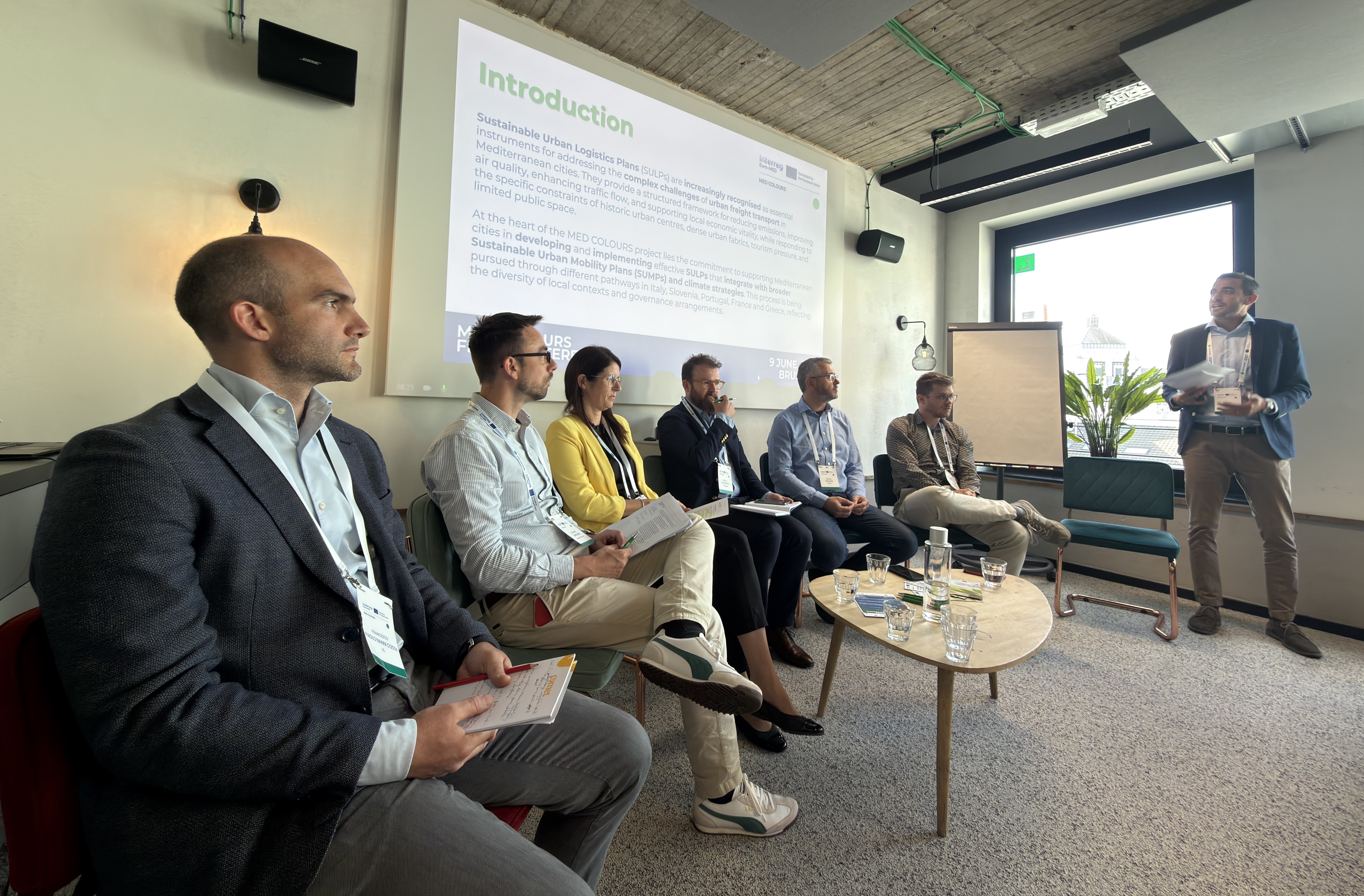
The debate then moved from strategy to implementation during the roundtable “From Strategy to Action – Developing SULPs in MED Cities”, moderated by Andrea Lorenzini (MemEx). Representatives from Livorno, Koper and Lisbon, together with experts from ITL Foundation, CERTH and SPL Lyon Confluence, discussed how Sustainable Urban Logistics Plans (SULPs) are becoming concrete operational tools to address the environmental, spatial and mobility challenges faced by Mediterranean cities. The discussion explored how cities are integrating urban freight into wider mobility and climate strategies through regulatory measures, infrastructure redesign, digital tools, data-driven planning and stakeholder engagement processes. Speakers also highlighted the importance of cooperation between municipalities, logistics operators and local communities in building resilient and low-emission urban freight systems.
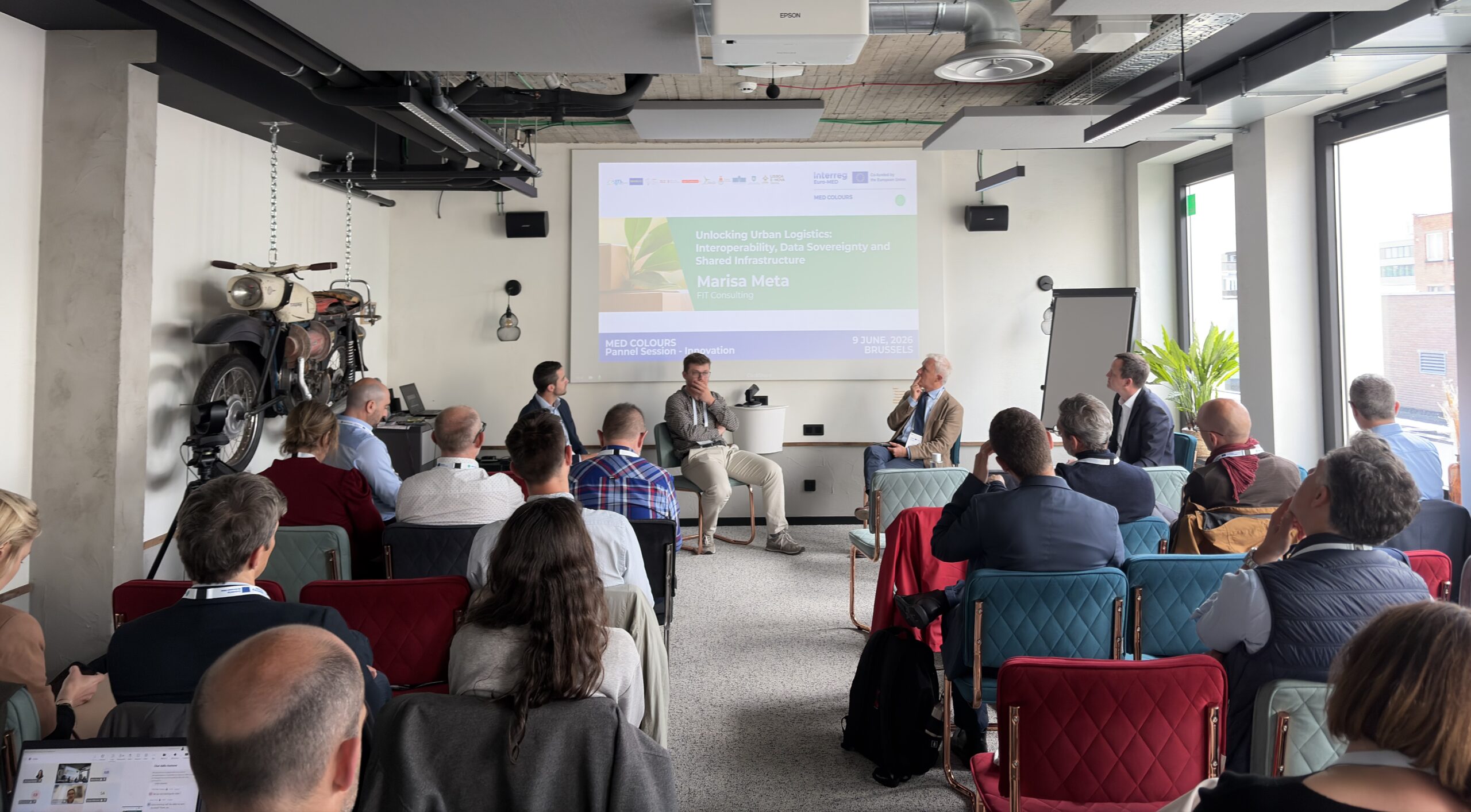
The afternoon panel session turned the spotlight on the concrete solutions and governance models shaping the future of sustainable urban freight. Moderated by Tomislav Letnik (University of Maribor), the discussion featured contributions from MemEx, SPL Lyon Confluence, FIT Consulting and EStà – Economia e Sostenibilità, covering topics ranging from logistics hubs and integrated urban planning to data interoperability, shared digital infrastructures and collaborative low-carbon delivery models. Drawing on pilot experiences from several European cities, speakers stressed the need to combine technological innovation with strong governance frameworks and stakeholder cooperation to make zero-emission urban logistics both scalable and economically viable.
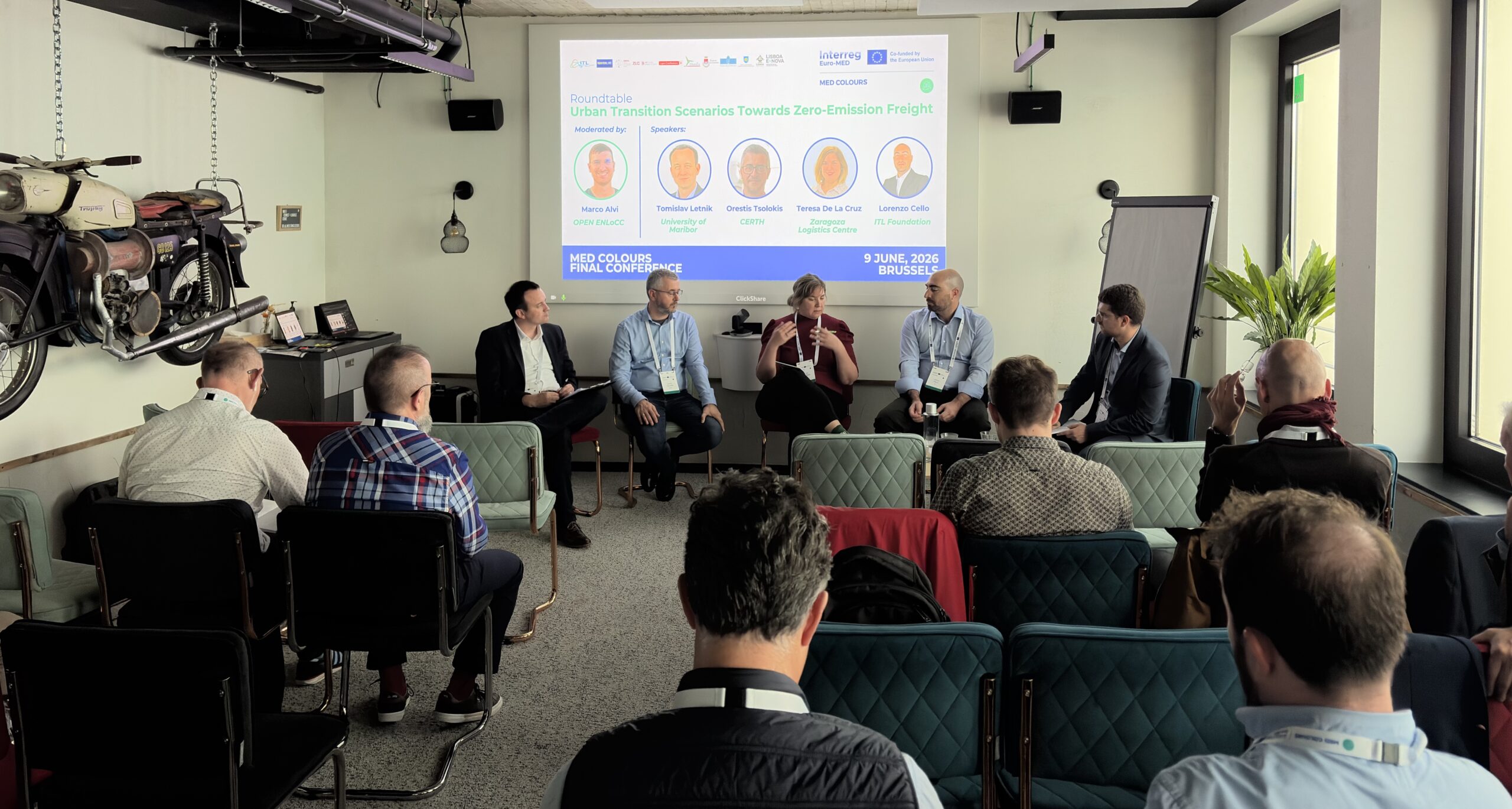
The final roundtable of the conference, “Urban Transition Scenarios Towards Zero-Emission Freight”, moderated by Marco Alvi (Open ENLoCC), addressed future perspectives for climate-neutral freight transport in Mediterranean cities. Speakers from the University of Maribor, CERTH, Zaragoza Logistics Centre and ITL Foundation discussed the role of integrated planning, cooperation and data-driven policies in supporting the transition towards cleaner and more efficient urban logistics ecosystems.
Beyond the technical discussions, the MED COLOURS Final Conference also represented an important networking opportunity for cities, researchers and practitioners committed to rethinking urban freight systems in a more sustainable and people-centred way.
As the MED COLOURS project approaches its conclusion, the conference reaffirmed the value of transnational cooperation in developing shared methodologies, practical tools and long-term strategies capable of supporting Mediterranean cities in their transition towards smarter, more resilient and zero-emission urban logistics.
The recording of the full MED COLOURS Final Conference is available online on the project’s YouTube channel: