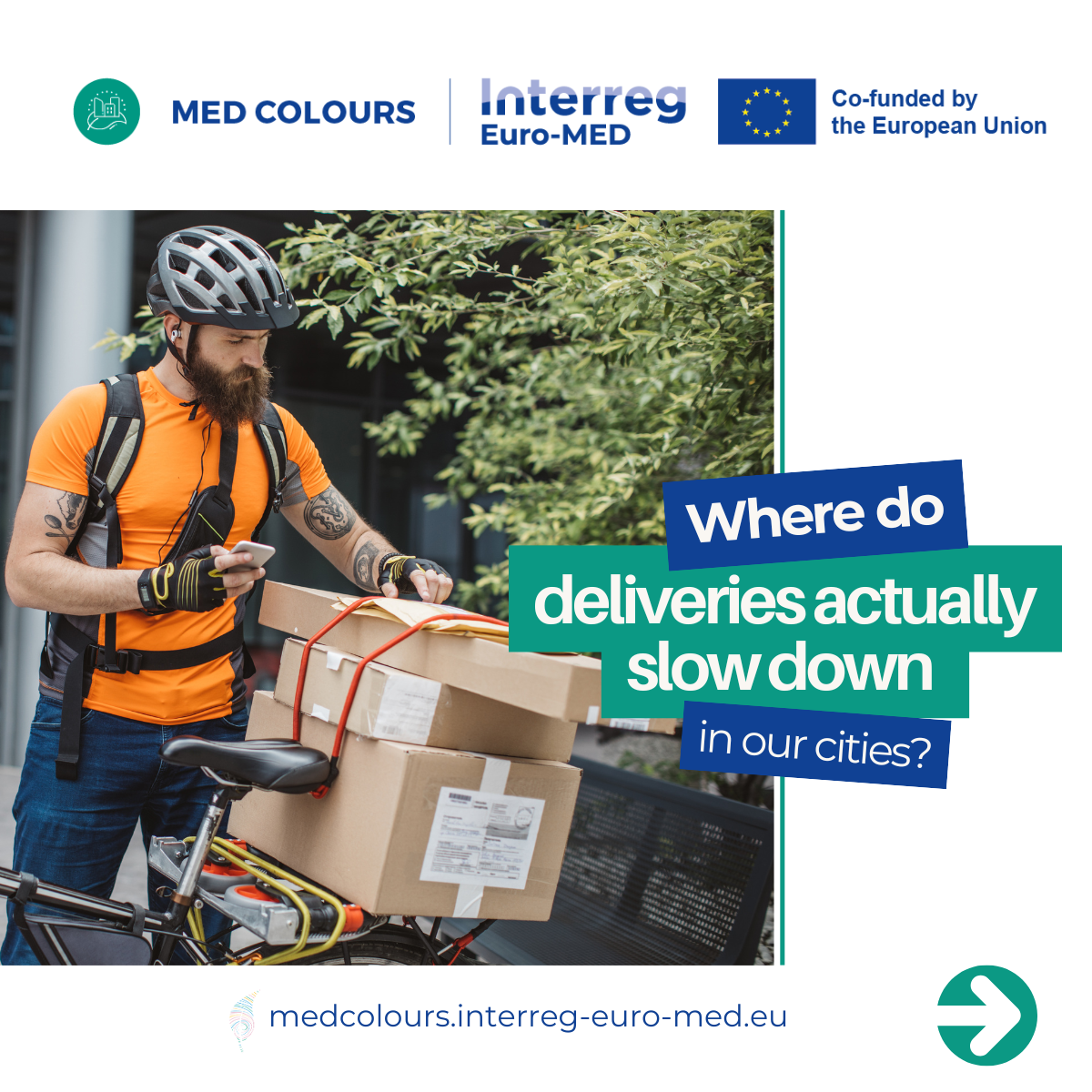

New episode of the MED COLOURS column dedicated to the topic of resilient and sustainable urban logistics. Once a month, we suggest articles, insights and studies of particular interest to the topics related to the project, with the aim of increasing knowledge related to the topics, and stimulating debate and knowledge exchange, which are essential ingredients for the achievement of our project goals.
This month’s focuse is: where do deliveries actually slow down in our cities?
While much attention is given to last-mile delivery, a critical share of its complexity lies in the final metres, the very last step from the delivery vehicle to the recipient. Issues such as failed deliveries, inefficient access to buildings, curbside congestion, and the growing demand driven by e-commerce are putting additional pressure on cities and operators.
The report “The Final Frontier of Urban Logistics: Tackling the Last Metres” by the International Transport Forum sheds light on this often underestimated phase of delivery operations.
What makes the final metres so critical?
• Time lost searching for parking or building access
• Delays at entrances, intercoms, or reception points
• Failed deliveries requiring redelivery attempts
These small frictions add up, impacting costs, congestion, and emissions across the entire system.
The study explores practical solutions such as parcel lockers, delivery micro-hubs, improved building design, and better coordination between cities, logistics operators, and property managers. It highlights how improving the final stage of delivery can significantly reduce costs, emissions, and inefficiencies.
Why is it worth reading?
Because it shows that improving urban logistics doesn’t always require major infrastructure investments: sometimes, optimizing the last few steps can make a systemic difference.
🔍 Read the full study here: https://www.itf-oecd.org/final-frontier-urban-logistics